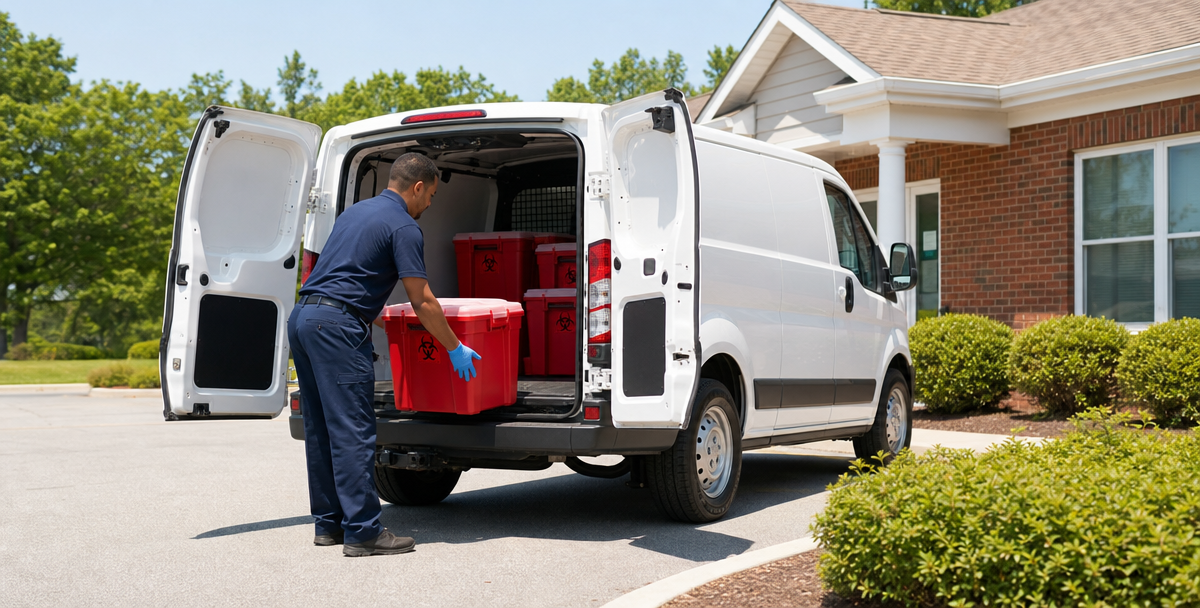
If your Massachusetts healthcare practice, clinic, or business generates biohazardous materials, understanding biohazard waste disposal in Massachusetts is not optional — it’s a legal requirement. From sharps and blood-soaked materials to pathological waste and microbiological cultures, biohazard waste must be handled, stored, and disposed of according to strict state and federal guidelines. This guide covers everything you need to know: what qualifies as biohazard waste, how Massachusetts law regulates it, the containers and labeling requirements, how often pickups should happen, and how to find the right disposal partner for your practice.
What Is Biohazard Waste? A Massachusetts Definition
Biohazard waste — also called infectious waste or regulated medical waste — is any material that contains or has come into contact with biological agents capable of causing disease in humans. In Massachusetts, the Department of Environmental Protection (MassDEP) and the Department of Public Health (MDPH) both play a role in regulating how this waste is categorized, stored, transported, and treated.
Under Massachusetts General Laws Chapter 111 and the state’s Infectious Waste Regulations (105 CMR 480.000), the following materials are classified as regulated infectious waste:
- Sharps: Needles, syringes, scalpel blades, lancets, and other items capable of puncturing skin
- Human blood and blood products: Liquid blood, serum, plasma, and other blood derivatives
- Pathological waste: Human tissues, organs, and body parts (excluding teeth and hair)
- Microbiological waste: Laboratory cultures, stocks of infectious agents, and live vaccines
- Animal waste: Contaminated animal carcasses, body parts, or bedding from research settings
- Isolation waste: Materials used to protect staff from highly communicable diseases
- Chemotherapy waste: Gloves, tubing, and other materials contaminated with antineoplastic agents
If your practice produces any of these materials, you are legally required to have a compliant biohazard waste disposal program in place — whether you’re a large hospital system or a solo practitioner.
Massachusetts Biohazard Waste Regulations: What Your Practice Must Do
Biohazard waste disposal in Massachusetts is governed by a combination of state and federal rules. Failing to comply can result in fines, permit revocation, and in serious cases, criminal liability. Here’s what the law requires:
Generator Registration and Recordkeeping
Most Massachusetts healthcare providers that generate regulated medical waste must register with MassDEP as infectious waste generators. You must maintain records of waste generation, storage, transport, and treatment for at least three years. These records must be available for inspection upon request.
Proper Segregation at the Point of Generation
Biohazard waste must be separated from regular trash at the point of generation — meaning right where it’s produced (exam rooms, labs, procedure areas). Mixing biohazardous materials with ordinary trash is a violation and creates serious health and liability risks.
Approved Containers and Labeling
Massachusetts requires specific containers for different types of biohazard waste:
- Red bags: Leak-proof, puncture-resistant red or orange bags labeled with the biohazard symbol for soft infectious waste (soiled gauze, gloves, gowns, etc.)
- Rigid sharps containers: FDA-cleared, puncture-resistant, leak-proof containers — typically red or yellow — for all sharps. Containers must be replaced when ¾ full.
- Secondary containment: For transport, red bags must be placed in rigid outer containers
All biohazard containers must be clearly labeled with the universal biohazard symbol and the word “BIOHAZARD” or “INFECTIOUS WASTE.” This is non-negotiable under both state law and OSHA’s Bloodborne Pathogens Standard (29 CFR 1910.1030).
Storage Requirements
Biohazard waste cannot sit in your facility indefinitely. Massachusetts regulations specify that regulated infectious waste must be stored under conditions that prevent leaks, odors, and pest access. Refrigerated storage may be required for pathological waste held longer than seven days. Most practices should arrange pickups frequently enough to avoid extended on-site storage.
How Often Should You Schedule Biohazard Waste Pickup?
Massachusetts law does not set a universal maximum storage period for all biohazard waste — the right pickup frequency depends on your volume, waste type, and storage capacity. However, here are practical guidelines for common practice types:
Recommended Pickup Frequency by Practice Type
- High-volume clinics, urgent care centers, and surgical practices: Weekly or bi-weekly pickup — these practices generate significant volumes of sharps and red bag waste that shouldn’t accumulate
- Primary care and specialty offices: Monthly or every-other-month pickup is often sufficient, depending on patient volume
- Tattoo studios, piercing shops, and aesthetics practices: Monthly pickup is typically adequate for sharps containers
- Dental offices: Monthly to quarterly pickup works for most dental practices, where sharps volume is lower
- Veterinary clinics: Monthly pickup for sharps and soft biohazard waste
The key is to never let containers exceed their fill lines and to have a reliable, scheduled pickup that fits your practice’s pace. A good biohazard waste disposal partner will work with you to find the right schedule — not lock you into unnecessary pickup frequency that inflates your costs.
Choosing the Right Biohazard Waste Disposal Company in Massachusetts
Not all medical waste companies are the same. When evaluating a biohazard waste disposal partner for your Massachusetts practice, ask these critical questions:
What to Look for in a Provider
- State licensing: Any company transporting regulated medical waste in Massachusetts must be permitted by MassDEP. Always verify their credentials.
- Manifest documentation: Your disposal company should provide waste manifests (chain-of-custody documents) for every pickup. Keep these for your records.
- Flexible scheduling: Avoid companies that force you into monthly minimums you don’t need. Look for providers that offer on-demand or schedule-based pickups sized for your actual volume.
- No long-term contracts: National companies often require multi-year contracts with automatic renewals and steep cancellation fees. Local providers are typically more flexible.
- Transparent pricing: Watch out for fuel surcharges, environmental fees, and container rental fees stacked on top of a low base rate. Ask for an all-in quote upfront.
- Container supply: The best providers supply and maintain your sharps containers and red bag liners as part of the service — you shouldn’t have to source these separately.
Working with a local Massachusetts biohazard waste disposal company often means better service, faster response times, and greater accountability than dealing with a national corporation’s call center. Local companies understand Massachusetts-specific regulations and are invested in the communities they serve.
Common Biohazard Waste Mistakes — and How to Avoid Them
Even well-intentioned practices make compliance mistakes. Here are the most common issues we see with biohazard waste disposal in Massachusetts:
- Overfilling sharps containers: A container that is more than ¾ full is a needlestick hazard and a violation. Train staff to swap containers proactively.
- Placing non-regulated waste in red bags: Red bag disposal costs more per pound than regular trash. Over-bagging (putting ordinary waste in biohazard bags) drives up your costs unnecessarily.
- No written exposure control plan: OSHA requires any employer with occupational exposure risk to maintain a written Bloodborne Pathogens Exposure Control Plan. This must be updated annually.
- Using unlicensed haulers: If a company can’t provide their MassDEP transport permit on request, don’t use them. You remain liable for improper disposal even if a contractor mishandles your waste.
- Missing recordkeeping: Generators must keep disposal records (manifests) for three years. A surprise inspection without records can result in significant penalties.
Getting these basics right protects your patients, your staff, and your practice’s reputation — and keeps you on the right side of Massachusetts regulators.
Biohazard Waste Disposal for Specialized Settings
Different types of facilities in Massachusetts generate different types of biohazard waste. Here’s a quick breakdown:
- Medical and dental practices: Sharps, blood-soaked materials, and in some cases chemotherapy waste or amalgam
- Tattoo and piercing studios: Sharps (needles, cartridges) and contaminated materials; studios are subject to Massachusetts DPH licensing and must have a compliant sharps disposal plan
- Research laboratories: Microbiological cultures, live vaccines, and animal-derived waste — often subject to additional biosafety requirements
- Home health agencies: Nurses and aides generate sharps and biohazard waste at patient homes; agencies must have a plan for collecting and consolidating this waste safely
- Funeral homes: Pathological and blood-contaminated materials require compliant disposal under both state and OSHA rules
Regardless of your setting, the core principles of biohazard waste disposal in Massachusetts remain the same: segregate properly, use the right containers, partner with a licensed hauler, and keep your records current.
Ready to Set Up Compliant Medical Waste Disposal?
Massachusetts Medical Waste Collection serves clinics, dental offices, tattoo studios, and more across the region. Get a free quote — no long-term contracts required.
Leave a Reply